Labyrinth spider
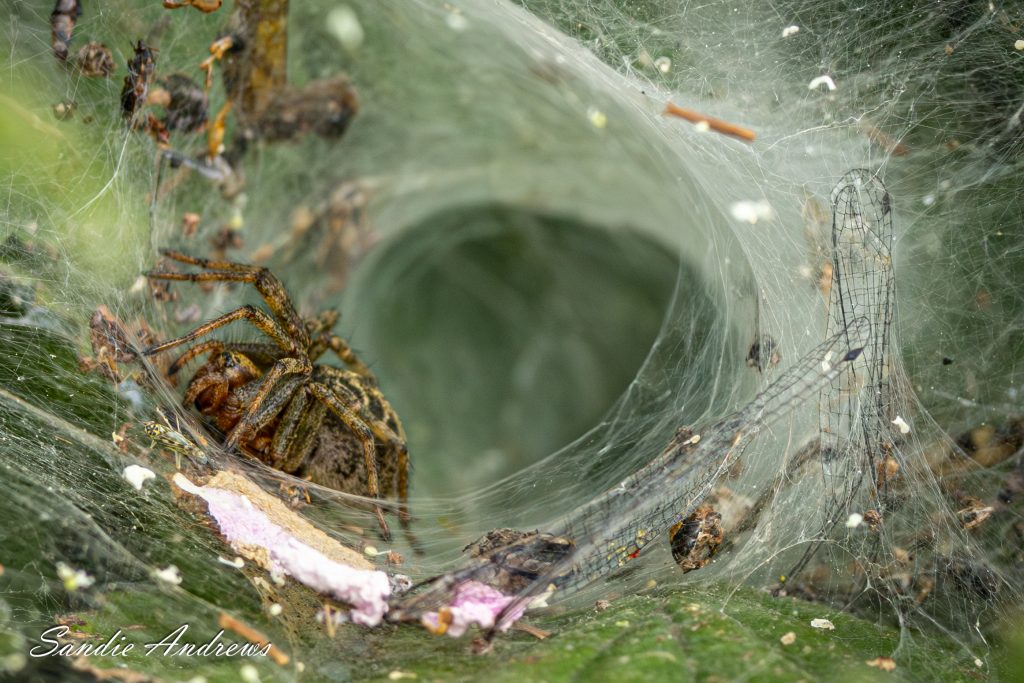
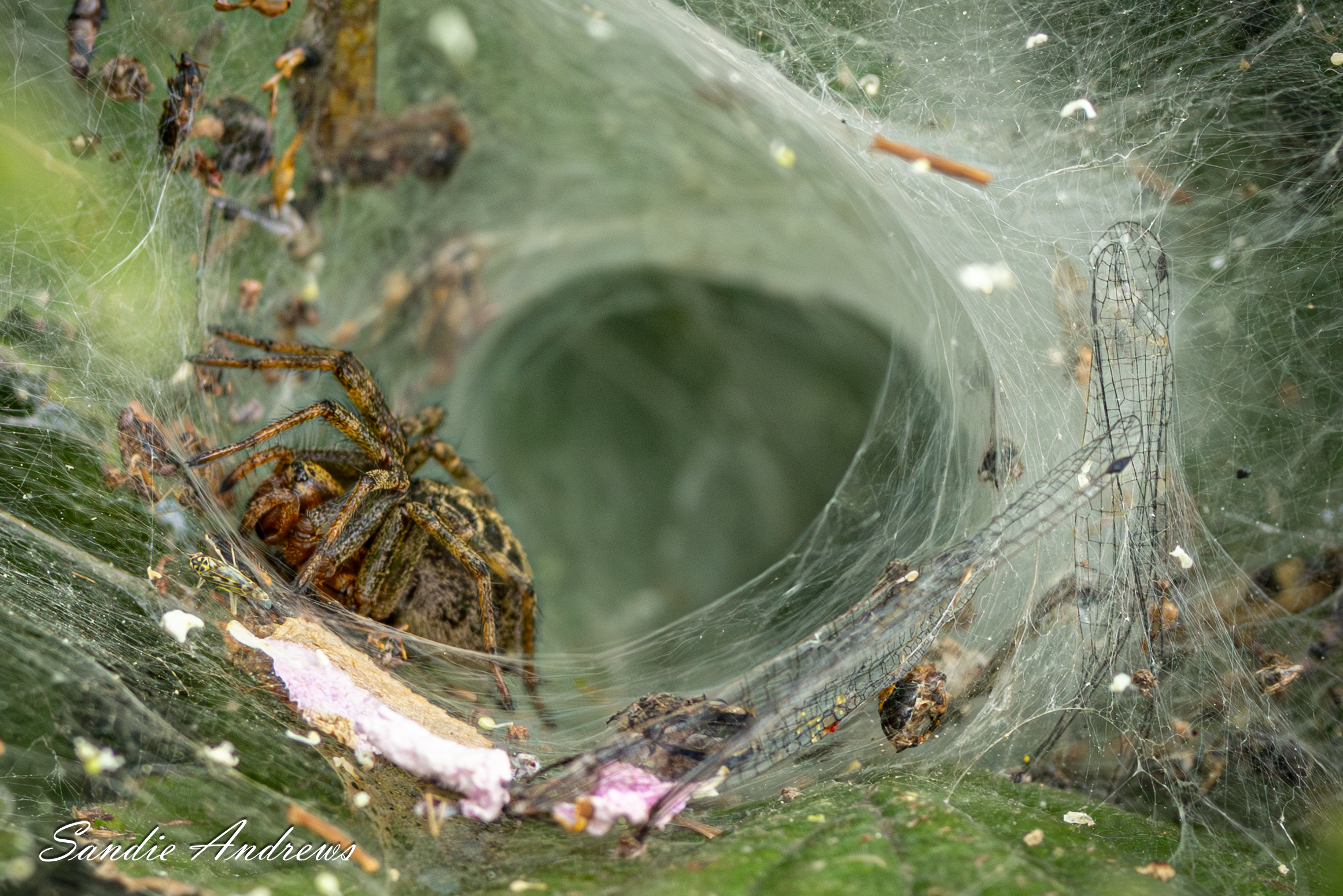
Scary isn’t it? That long, dark tunnel. You can image how Frodo felt. Expect of course that this spider isn’t a meter or so high and only has a body length of up to 18 mm. That shouldn’t frighten any of us but if you read the bit about its venom apparatus, well that is interesting.
Venom is made inside a pair of long, tubular venom glands. Each gland is wrapped in bundles of muscle fibers and when these muscles squeeze, they push the venom out of the gland. The squeezed venom flows into a long venom duct which passes straight through the spider’s chelicera (its mouth part base) and connects to a tiny opening near the tip of the movable fang, from where it is injected into its prey.
A labyrinth spider will live for no more than a year and the female will produce between 50 and 130. Spiderlings hatch from eggs laid in the late summer or autumn and spend the winter safely inside the maternal egg sac or central retreat, living off their stored egg yolk. They emerge in the spring as young spiders, growing through the summer months to reach adulthood by June or July. The female remains in her web and and male pings the web to inform her of his presence. If she is happy, mating occurs usually in July and August, after which adult males generally die off. The females survive long enough to build egg sacs and protect the next generation including her selfless act of matriphagy. (mater – mother and phagein – to eat).
How Matriphagy Works: The mother’s internal organs and tissues break down and liquefy into nutrient-rich fluids to feed her young. While she is still responsive and often weakened or actively encouraging them, the spiderlings swarm her body. They bite her and inject digestive enzymes, consuming her living tissues until she dies.
I don’t think we need more than one image of a labyrinth spider to get the picture.